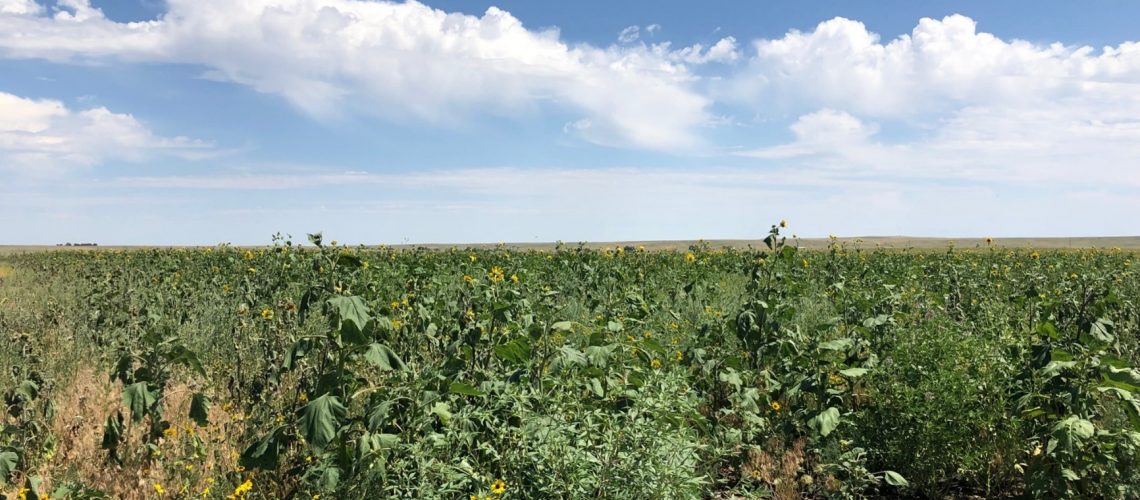
Guest Post by Amy Gill, 2024-2025 Sustainability Leadership Fellow and Ph.D. Candidate in the Department of Forest & Rangeland Stewardship at Colorado State University
It’s no secret that pollinator species across the US are endangered, but the massive and potentially catastrophic consequences of pollinator extinction may not be as well known. Land degradation and climate change continue to diminish many ecosystem services across dryland regions including decreased native bee and insect populations [1]. One pressing concern in dryland restoration is the decline of pollinators, including bees and butterflies, which play a crucial role in food production and biodiversity. In the U.S., bee populations and other beneficial pollinators have sharply declined due to habitat loss, pesticide exposure, disease, and other stressors [1, 4]. Pollinators are vital to food security, ecosystem health, and biodiversity, making their conservation a national priority. Recognizing this, the U.S. Pollinator Health Task Force set ambitious goals, including reducing honeybee colony losses and restoring 2.8 million hectares of pollinator habitat by 2020 [2].
How CRP Supports Pollinators
The U.S. Department of Agriculture’s Conservation Reserve Program -Farm Service Agency (USDA-FSA) Conservation Reserve Program (CRP) is one of the largest land-based restoration programs in the US[2].. CRP is a key initiative that aims to convert highly erodible cropland into long-term conservation habitats, promoting landscape diversity and productivity. Through programs like CP-42 (Pollinator Habitat), CRP aims to increase pollinator resources by establishing diverse native plant communities that provide year-round forage for bees, butterflies, and other beneficial insects. According to Natural Resources Conservation Services criteria, CRP pollinator plantings should result in the establishment of at least three pollinator-friendly plant species throughout the growing season to provide year-round forage for bees, butterflies, and other beneficial insects. However, these initiatives have faced challenges due to harsh growing conditions and degraded soils. Despite these efforts, many CRP pollinator plantings in semiarid regions have struggled due to harsh growing conditions, poor seed establishment, and lack of effective management practices. To enhance restoration success, new strategies are needed to improve floral abundance and diversity across CRP lands.
Challenges in CRP Pollinator Plantings
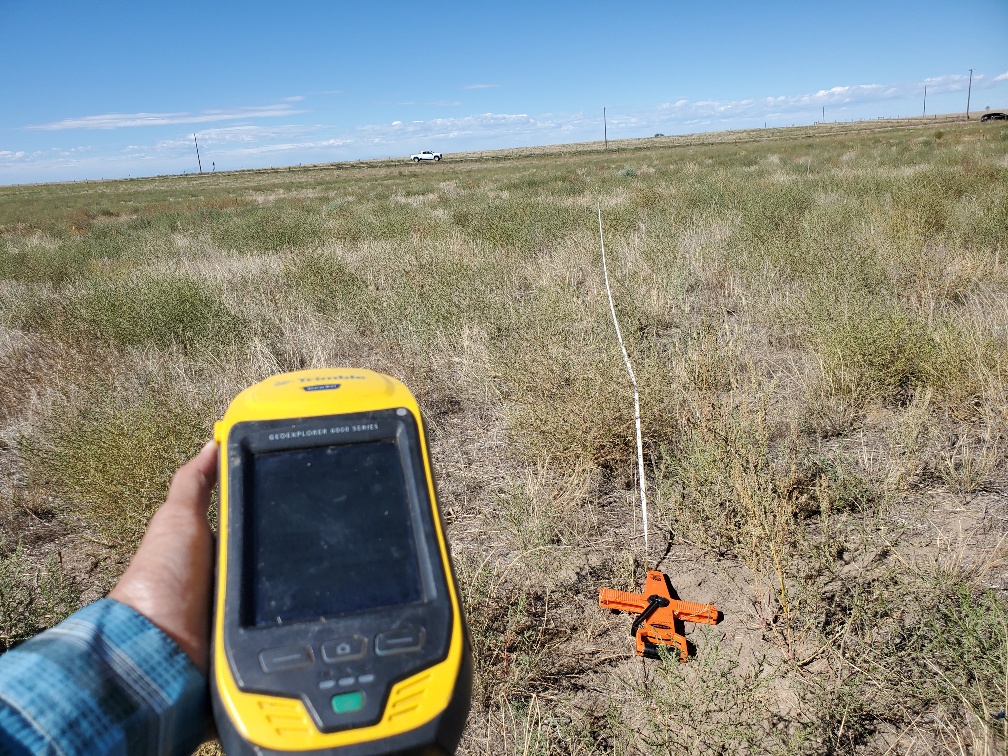
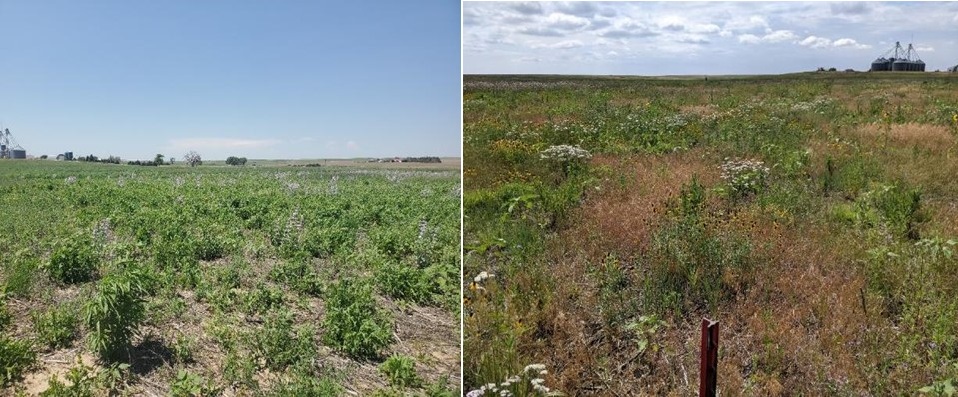
CRP is a major effort to restore degraded cropland by incentivizing farmers to plant perennial native vegetation. A specific focus of the CRP is creating pollinator habitats to support declining insect populations. New strategies are needed to improve CRP pollinator planting success and deliver USDA-FSA CRP goals. However, in dryland regions, these pollinator-friendly plantings often fail due to poor seed establishment, leading to financial losses and land covered in weeds rather than beneficial plants. To improve CRP pollinator plantings, researchers are testing alternative seed mixes that balance cost, ecological benefits, and weed control. Success depends on factors like seed mix selection, proper seeding techniques, soil preparation, and amendments like fertilizers or organic matter. A study conducted across Colorado, Utah, and Montana is examining how different restoration treatments can increase native plant density and limit weed growth. This research aims to improve dryland restoration strategies, making pollinator habitats more effective and cost-efficient.
Strategies to Improve Pollinator Habitats
To overcome the above-mentioned challenges, innovative restoration approaches are needed. Techniques like water catchments, soil amendments, and seedbed preparation can improve soil conditions, while strategies like selective seeding, invasive species control, and introducing resilient native plants can enhance plant establishment. However, restoration success varies depending on environmental factors, and more research is needed to identify the best methods for different dryland conditions. Innovative strategies to improve CRP pollinator planting success are needed, such as:
- Selecting Early-Flowering Species: Introducing plant species that bloom earlier in the season can provide a continuous floral supply, ensuring food availability for pollinators from spring through fall. [3].Ashworth et al (2022) studied the long-term effect of ecological disturbance regimes on the growth and flowering habitat success of commercially available seed mix, CP42 pollinator mix.
- Enhancing Seed Mix Diversity: Using a variety of native flowering plants in seed mixes can improve pollinator attraction and increase the likelihood of successful plant establishment. When using multiple species for restoring pollinator-friendly plant communities, the seed mixture will affect how the flower abundance and diversity of the restored community will vary through the season, because individual plant species will start and finish their flowering depending on the species-specific provenance effects. Such differences in flower abundance and diversity are likely to modulate how the plant community interacts with pollinators and affect pollinator identity, abundance, and diversity.
- Adopting Better Management Practices: Implementing site-specific management strategies, such as adjusting mowing schedules, soil preparation techniques, and controlled burns, can optimize habitat conditions for pollinators. However, it is largely unknown how growing season, managemental regimes, and treatments play a role in extending pollinator mix persistence to have an extended blooming period for pollinator bloom periods and pollinator mix persistence.
- Long-Term Monitoring and Adaptive Management: Continuous monitoring of pollinator abundance and flower diversity can help refine best practices, ensuring that CRP restoration efforts remain effective over time.
Researching Pollinator Success in CRP Lands
To test these strategies, the CRP team conducted field studies across CRP sites in the western Colorado U.S., collecting floral resource and pollinator data from 2017-2023. In the summer of 2018, CRP teams studied how to improve pollinator habitats in CRP lands by monitoring floral resources and pollinators. To track floral resources, we set up three permanent transects in each plot and recorded data along a 2-meter-wide floral belt at various distance markers. We counted flowering plants and their open inflorescences, ensuring only those within the belt were included.
For pollinator monitoring, we observed pollinators along a 100-meter transect at the same distance intervals and recorded plant and pollinator species, as well as how frequently pollinators visited flowers. Data collection occurred from 2017 to 2022 across multiple CRP sites, helping us understand the impact of restoration efforts on pollinator-friendly plant communities.
Looking Ahead: Strengthening Pollinator Conservation
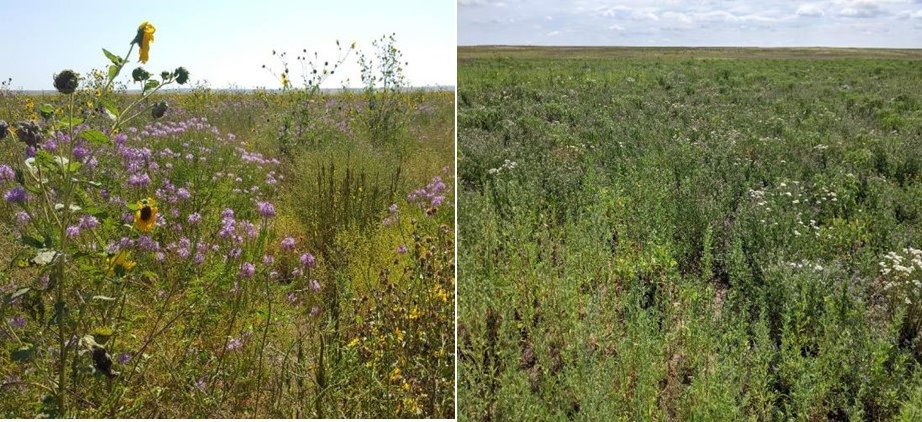
To make CRP projects more effective in supporting pollinators, restoration efforts must prioritize species selection, planting techniques, and adaptive management strategies. By doing so, conservation programs can create resilient habitats that not only support declining pollinator populations but also enhance overall ecosystem health.
Our study will increase understanding of the capacity of restoration treatments to improve floral resource availability to pollinators across CRP plantings and improve the restoration success of CRP projects, particularly the ones in Colorado. Restoration treatments for pollinator habitat reconstruction vary widely in expense, logistics, managemental techniques, and ecological rationale.
The future of sustainable agriculture and biodiversity conservation depends on these efforts. By investing in pollinator-friendly restoration, we can ensure healthier landscapes, more productive farms, and a more resilient natural world.
References:
[1] Kovács‐Hostyánszki, A., Espíndola, A., Vanbergen, A. J., Settele, J., Kremen, C., & Dicks, L. V. (2017). Ecological intensification to mitigate impacts of conventional intensive land use on pollinators and pollination. Ecology letters, 20(5), 673-689.
[2] Otto, C. R., Zheng, H., Gallant, A. L., Iovanna, R., Carlson, B. L., Smart, M. D., & Hyberg, S. (2018). Past role and future outlook of the Conservation Reserve Program for supporting honey bees in the Great Plains. Proceedings of the National Academy of Sciences, 115(29), 7629-7634.
[3] Ashworth, A. J., Adams, T., & Jacobs, A. (2022). Long-term sustainability implications of diverse commercial pollinator mixtures for the conservation reserve program. Agronomy, 12(3), 549.
[4] Kremen, C. (2020). Ecological intensification and diversification approaches to maintain biodiversity, ecosystem services and food production in a changing world. Emerging Topics in Life Sciences, 4(2), 229-240.