Guest post by Thomas Gifford, 2025-2026 Sustainability Leadership Fellow and Ph.D. Student in the Department of Economics and Center for New Energy Economy
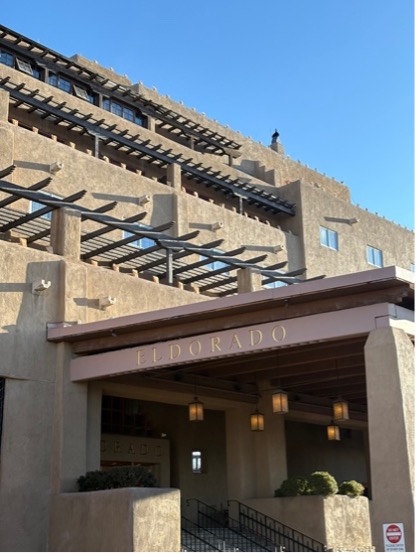
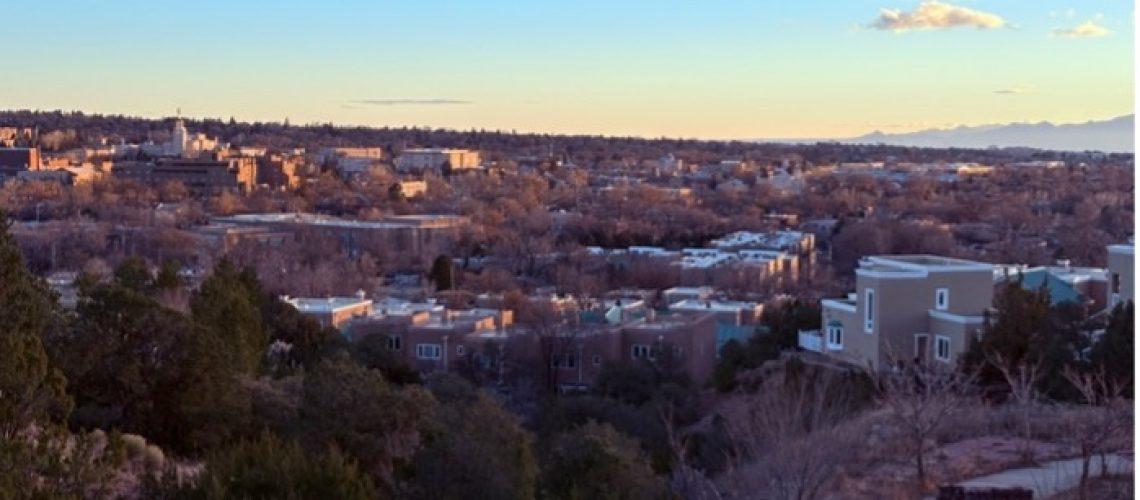
Last week, I ventured from Fort Collins down to the Land of Enchantment to learn about the latest research from regional scientists around the world. For three days in the muted-brown, adobe-style Eldorado Hotel, only a three-minute walk from historic downtown Santa Fe, I was able to meet fascinating researchers, catch up with old colleagues, take in the local art scene, and eat all the carne adovada I could ever wish for.
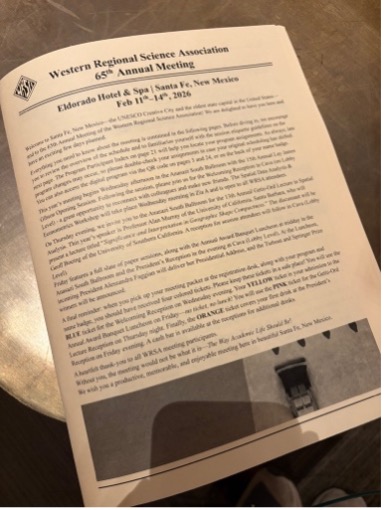
Thanks to the support of the School of Global Environmental Sustainability, I was able to attend the 65th annual conference of the Western Regional Science Association in Santa Fe, New Mexico. The conference was a fantastic opportunity to learn about modern research on a wide variety of sustainability issues, including the local impact of AI data centers, micromobility in cities, electric grid reliability, the moral hazards of wildfire mitigation, people’s willingness to pay for rural water improvement projects, labor challenges in the green transition — and that’s just the tip of the iceberg. Researchers came from around the world and from a wide variety of disciplines, which contributed to a supportive, interdisciplinary environment to discuss and enhance each other’s research. I met scientists from Ghana, Korea, Alaska, Brazil, and Italy who specialized in economics, geography, ecology, and engineering, which created a unique collaborative space where a wide variety of perspectives were shared. I found this characteristic made this conference stand out against others I’ve attended in the past that primarily cater to North American scientists.
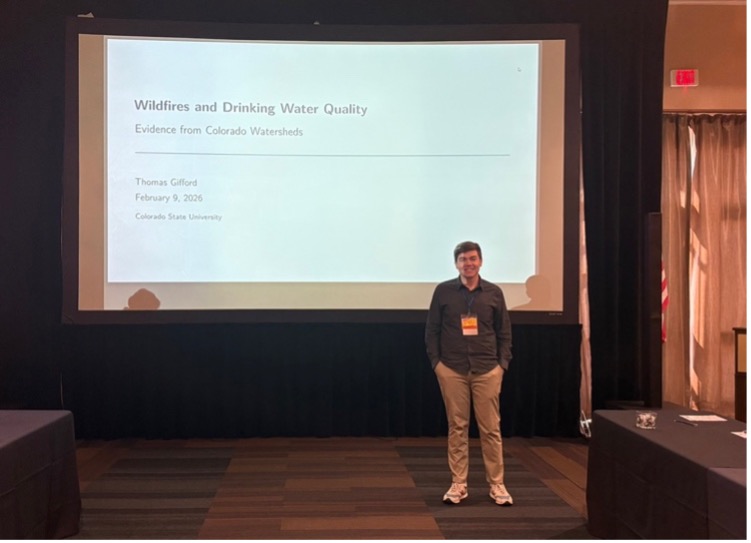
In addition to learning about a wide array of topics from others, I was also able to present my own research, “Wildfires and Water Quality: Evidence from Colorado Watersheds,” where I use econometric techniques to explore the relationship between wildfire and local water quality. My discussant, a geographer from Italy, provided a great analysis of my paper and gave me some insightful advice that I know will improve the quality of the final draft. It was encouraging to get such great engagement and valuable feedback on my research, as it simultaneously validated the importance of my work while giving me actionable ways to improve it.
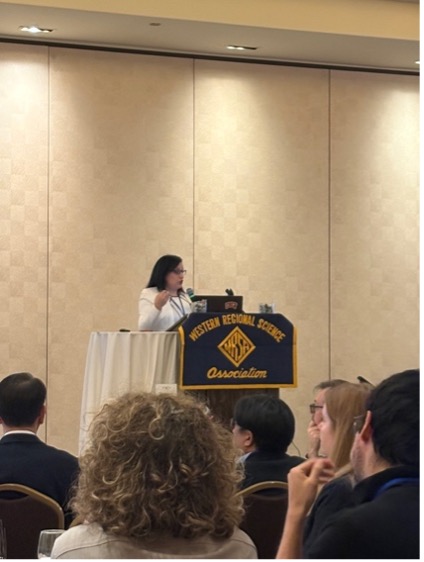
One of the highlights of the conference was the presidential address from Dr. Alessandra Faggian, who traveled all the way from the Gran Sasso Science Institute in L’Aquila, Italy to present her work entitled “Too many, too few, or too uneven? Fertility, peripheries, and sustainable growth.” Dr. Faggian’s talk centered on declining fertility rates across Italy and the growing discrepancy between urban and rural regions. She advocated for a holistic policy approach that targets the underlying drivers of demographic change instead of leaning on historically expensive, ineffectual pro-natal policies. Since it’s a topic I don’t usually work on, I found the talk especially informative.
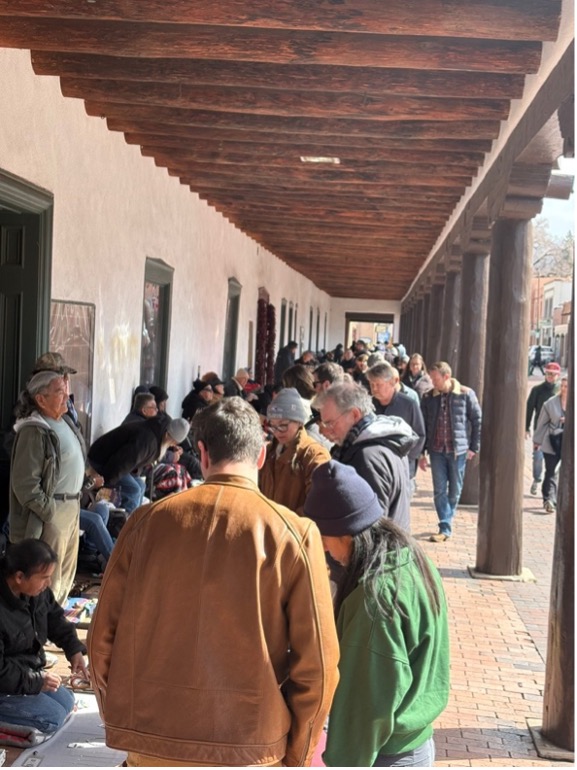
On a personal note, Santa Fe is one of my favorite cities in the world. Between the architecture, landscape, history, art, food, and the unique mix of Spanish, Native American, Mexican, and U.S. culture, I find it to be an incredibly special place. It encapsulates the American dream in many ways, as the melting pot of people and cultures has created something truly unique in New Mexico. Sitting at the community table at Café Pasqual’s on Saturday morning while eating some delicious breakfast tacos, I met incredibly friendly people from Santa Fe, Mexico, California, rural Colorado, and Manhattan. That’s probably the first thing I’ll remember about this conference years from now. The science was great, but the human connection was even better.
Once again, thanks to the School of Global Environmental Sustainability for the opportunity to attend. The experience was both personally and professionally gratifying, and I came back motivated to be an even better social scientist.