
Guest Post by Andrea Loudenback, 2022-2024 InTERFEWS Fellow, Ph.D. Student in the Department of Soil and Crop Sciences at Colorado State University
For decades, scientists around the world have been working to find sustainable solutions to meet future food production demands amidst a changing climate. The Food and Agriculture Organization of the United Nations (FAO) states that we will need to produce 60% more food by the year 2050 to meet global population needs (2023), however, changes in temperature, precipitation, and weather patterns impose challenges to meeting these needs while supporting healthy ecosystems and minimizing environmental impacts. A major obstacle to supporting future food production with reduced pollution is nutrient management. With the boom of the industrial revolution, farms were able to grow record yields with the use of synthetic fertilizers. The use of these fertilizers came with a cost to soil health and productivity, and present systems have recognized a need to increase reliance on naturally occurring fertilizers to rebuild soil ecosystems, maintain yields, and increase resilience.
Manure fertilizers are crucial sources of naturally available nutrients for crop production and allow producers to cycle nutrients through our food systems. A fertilizer is naturally available if it comes from living things or the Earth and doesn’t undergo any form of synthesization. Annually in the United States, we produce 1.4 billion tons of manure across all livestock species (Pagliari, 2020). While not all of this manure leaves the farm or is applied as fertilizer, the nutrients still remain and have their own host of environmental impacts regardless of storage, location, or use. The nutrient profile of manure can be highly variable both on a single farm and across multiple farms. Variables such as animal type, feed materials, and manure handling and storage can all impact nutrient availability and utilization. Additionally, if overapplied manure fertilizers emit harmful greenhouse gasses, increase leaching and runoff (EPA, 2024), and add unnecessary salts to soils (Hoidal, Rosen, & Pagliari, 2021). However, there are also benefits to using manure fertilizer. For example, in arid climates like we have in Colorado, manure can increase water holding capacity of soils, which in turn decreases our need for irrigated water to support growth (UMN, 2024).
One approach that is gaining traction in addressing the obstacle of nutrient management is precision agriculture. Precision agriculture is a way for farmers to run their operations that relies heavily on technology to manage livestock, improve crop yields, and apply nutrients more efficiently and with greater accuracy. These technologies can provide farmers with more automated production practices while mitigating negative ramifications on ecosystems and the environment. Precision technology is quickly dominating the manure management arena; however, economic barriers (namely the need for capital) may hinder adoption.
NIRS Technology as a Tool for Precision Manure Management
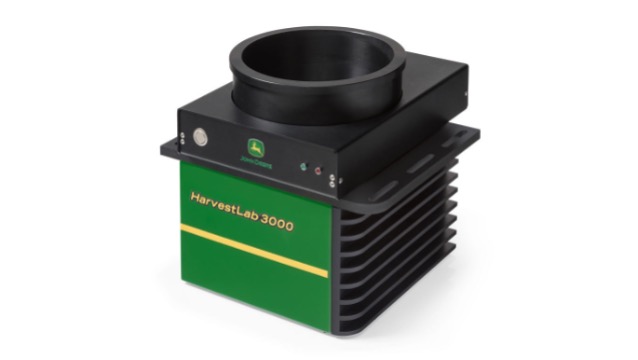
In 2019, John Deere released the Manure Constituent System, which is a manure application component housed in their HarvestLab 3000 (Image 1). The HarvestLab 3000 is a sensor that uses near infrared spectroscopy (NIRS) and mounts directly onto farm machinery. The use of NIRS in environmental studies has grown because of the highly sensitive, robust data provided from this type of analysis. Specifically, sensing has gained traction in agriculture for its ability to provide on-the-go nutrient analysis for management decisions.
NIRS is a form of chemical analysis that measures how light interacts with different forms of matter to determine relevant properties.
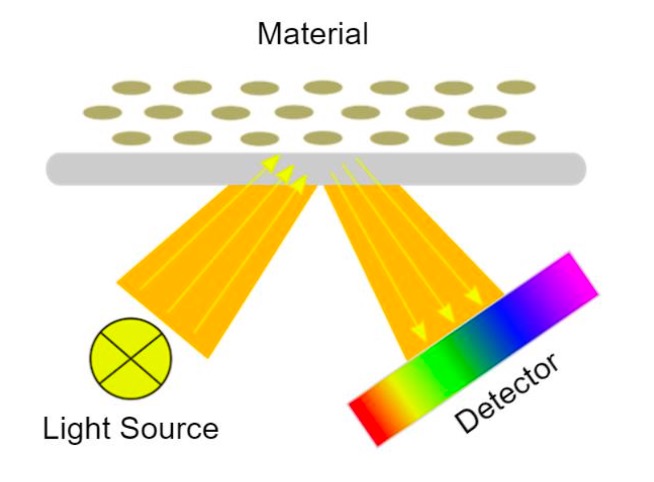
Within the HarvestLab 3000, the light shines on the manure as it is passing through the sensor and the detector measures how light is scattered and absorbed (Image 2). This sensor will predict dry matter, organic matter, total nitrogen, ammonium, phosphorus and potassium from livestock manure in real time providing 4,000 readings/second (Manure Sensing & HarvestLab 3000 Operation Manuals, John Deere, 2019). Furthermore, when combined with tractor automation software, the sensor is cable of setting prescribed application rates or limits based on plant needs. By using the HarvestLab 3000 producers reduce the chances of over or under applying fertilizer, decrease uncertainty of nutrient variability in manure, and potentially reduce their environmental impacts from manure management.
John Deere’s HarvestLab 3000 has historically been used in crop harvest, but within the last five years there has been increased interest in its capabilities for manure application. To use the HarvestLab 3000 and Manure Constituent System, an operator must be running John Deere Machinery, or purchase John Deere software that makes the sensor compatible with other machinery brands. Additionally, the sensor is only compatible with liquid manure. In Colorado this is particularly advantageous as we house many large dairy farms that store liquid manure in lagoons or ponds for application to cropland.
In a collaborative effort to validate the efficacy of the HarvestLab 3000 in better managing liquid manure fertilizers during the application process, researchers at Colorado State University are leading a three-year study in Colorado’s Front Range. The goal of this project is to determine the feasibility of implementing NIR technology for sustainable manure management along with its benefits for reducing the environmental impacts of manure application. The interdisciplinary team consists of researchers in Soil and Crop Sciences, Animal Science, and Agriculture and Resource Economics, local dairy and crop producers, and commercial farming equipment companies. Objectives of this study aim to quantify ammonia losses from manure application, track changes to soil dynamics and soil health, and complete an economic analysis to determine feasibility of adopting NIRS technology for manure application. Further considerations of the study include comparison of crop yield and quality across treatments.
Our work will explore the relationship between environmental impacts of manure fertilizers and application rate (fixed vs. variable rate), application method (broadcast vs. injection), and use of the sensor. While the quantification of gaseous losses, soil health paraments, crop yields, and crop quality are critical in understanding the benefits of this technology, it is equally, if not more important for us to understand the economic feasibility of adopting NIRS technology for manure application. Ultimately, this research aims to aid producers in honoring their roles as stewards of the lands and environment while supporting their economic and production goals. The results of this study will help drive decisions that support industry needs while facing changes to environmental regulation and drive nutrient management beyond the barnyard and into the future of precision agriculture.
References
Cates, A. 2024. The connection between soil organic matter and soil water. University of Minnesota Extension. St. Paul, MN. https://blog-crop-news.extension.umn.edu/2020/03/the-connection-between-soil-organic.html
EPA, 2024. Sources and Solutions: Agriculture. Environmental Protection Agency. United States. https://www.epa.gov/nutrientpollution/sources-and-solutions-agriculture
Food and Agriculture Organization of the United Nations, How to Feed the World 2050 Expert Meeting: 24-26 June 2009, FAO Headquarters, Rome: Proceedings of the Expert Meeting on How to Feed the World in 2050, 2009.
Hoidal, N., Rosen. C, Pagliari, P. 2021. How to correct problems caused by using too much compost and manure. University of Minnesota Extension. St. Paul, MN. https://extension.umn.edu/nutrient-management-specialty-crops/correct-too-much-compost-and-manure
Pagliari, P., Wilson, M., He, Z. 2020. Animal manure production and utilization: impact of modern concentrated animal feeding operations. In: Waldrip, H.M., Pagliari, P.H., He, Z., editors. Animal Manure: Production, Characteristics, Environmental Concerns and Management. ASA Special Publication 67. Madison, WI: ASA and SSSA. p. 1-14. https://doi.org/10.2134/asaspecpub67.c1.