
Guest post by Christian Sewor, 2025-2026 Sustainability Leadership Fellow and PhD Student in the Department of Environmental and Radiological Health Sciences
Household Air Pollution and the Path That Shaped My Work: A Return to Why
As my doctoral journey slowly comes to an end, I find myself returning to a question I thought I had already answered: Why am I doing this work? One would think that after 4 grueling years of rigorous training and research, I would feel prepared to face the next chapter of my life. Instead, I find myself reflecting more deeply on what drew me to the field of environmental epidemiology in the first place. This renewed dilemma has cast my mind back to why I chose this career path in the first place.
Growing up in Akplabanya, a rural fishing community in Ghana, I was quite familiar with environmental pollution, particularly household air pollution from the use of biomass fuels. I remember how often smoke from fish preservation drifted into our home, filling the air we breathed. Women in my community carried out the demanding work of preparing fish for sale, their eyes watering constantly from the fumes.
Top Photo Woman involved in fish smoking
At that time, I did not think critically about the health implications of biomass fuel use within our local fishing economy. However, one thing was very clear to me: this was the primary means of livelihood in my community. It was just how our families survived.
Looking back now, this experience feels central to my path, and one thing has become clearer to me: no one should have to sacrifice their health to make a living. In many ways, this belief was shaping my interest in environmental epidemiology long before I even realized it.
Today, I study household air pollution, a problem that affects about a third of the global population, with the majority of those affected in low-and middle-income countries.1,2 Household air pollution in these settings is driven by a heavy reliance on solid fuels such as coal, wood, dung, and crop residues for cooking and heating.

In 2023, household air pollution accounted for about 2.8 million deaths;1 can you imagine that? In fact, it was associated with more deaths than infectious diseases3 like malaria, tuberculosis, and HIV/AIDS. Given this context, one might anticipate investments in addressing household air pollution, akin to efforts for these infectious diseases. Unfortunately, that is not the case.
Household air pollution is, in many ways, ubiquitous, even here in the U.S., where something as routine as barbecuing in the backyard or cooking on a gas stove brings exposure. Yet, the greatest burden continues to fall on communities that are too often overlooked in research.
In my doctoral work, I tried to shed light on this serious global health challenge by leveraging longitudinal and cross-sectional data from randomized controlled trials conducted in rural Honduras and Rwanda to investigate the cardiometabolic effects of household air pollution. My work explores the impact of a household air pollution-related intervention (a cleaner-burning biomass stove, which was community-engineered, the Justa) and exposures (fine particulate matter [PM2.5] and black carbon) on inflammation and blood pressure, two key biological pathways that underlie the health effects of air pollution.
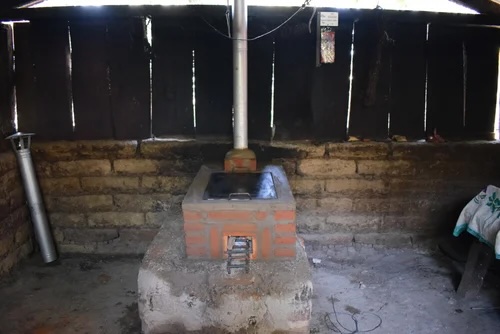
In my research, while we found that clean cooking technologies, like the Justa stove, which was rolled out in rural Honduras, can meaningfully reduce household air pollution,4,5 these reductions do not consistently translate into measurable health benefits within the relatively short timeframes of most studies, an important nuance. Notwithstanding, pollutants from biomass combustion were associated with changes in inflammatory markers and blood pressure, reinforcing the need for sustained interventions and policies to reduce exposure.
The lessons from my doctoral work are clear. The problem of household air pollution is not only complex but also very real, and addressing it requires coordinated, collective action grounded in equity. It means listening closely to the communities most affected and recognizing that while solutions exist, they must be sustained over time to truly make a difference.
Holding onto these lessons is not always easy. In a world that is constantly changing and often overwhelming, it is easy to feel disillusioned as a scientist. For me, the way forward is to keep returning to the question of why. Remembering where this journey began, and who it is meant to serve, is what keeps me going.
References
- Health Effects Institute. State of Global Air 2025 [Internet]. 2025. Available from: www.stateofglobalair.org
- Bennitt FB, Wozniak S, Causey K, Spearman S, Okereke C, Garcia V, et al. Global, regional, and national burden of household air pollution, 1990–2021: a systematic analysis for the Global Burden of Disease Study 2021. The Lancet. 2025 Apr 5;405(10485):1167–81. doi:10.1016/S0140-6736(24)02840-X PubMed PMID: 40118081.
- Naghavi M, Kyu HH, A B, Aalipour MA, Aalruz H, Ababneh HS, et al. Global burden of 292 causes of death in 204 countries and territories and 660 subnational locations, 1990–2023: a systematic analysis for the Global Burden of Disease Study 2023. The Lancet. 2025 Oct 18;406(10513):1811–72. doi:10.1016/S0140-6736(25)01917-8 PubMed PMID: 41092928.
- Benka-Coker ML, Young BN, Keller JP, Walker ES, Rajkumar S, Volckens J, et al. Impact of the wood-burning Justa cookstove on fine particulate matter exposure: A stepped-wedge randomized trial in rural Honduras. Science of The Total Environment. 2021 May;767:144369. doi:10.1016/j.scitotenv.2020.144369
- Young BN, Good N, Peel JL, Benka-Coker ML, Keller JP, Rajkumar S, et al. Reduced Black Carbon Concentrations following a Three-Year Stepped-Wedge Randomized Trial of the Wood-Burning Justa Cookstove in Rural Honduras. Environ Sci Technol Lett. 2022 Jun 14;9(6):538–42. doi:10.1021/acs.estlett.2c00098