![Workshop Participants at the University of Florida Women Leading Change . From Women Leading Change: Human Rights and Environmental Justice in Latin America [Image] by Dr. Joel Correia, 2019, University of Florida. https://www.latam.ufl.edu/blog/2019/women-leading-change-human-rights-and-environmental-justice-in-latin-america.html](https://sustainability.colostate.edu/wp-content/uploads/sites/2/elementor/thumbs/Martinez-Blog-Photo-1-rhus0ub8b5m3itj1cq1yxlhsthmcot91zov1wgaufc.jpg "Martinez-Blog-Photo-1")
Guest post by Claudia Fernanda Martinez, Master’s Student, Department of Forest & Rangeland Stewardship
Growing up in a Mexican household, I was always confused by the contradictory aspect of men being the head of the household, yet women would be the managers of the home. As I got older, I understood that this was a part of patriarchal standards that is standard in Latin America, where women are hidden leaders who are not equitably represented or treated. Machismo is a patriarchal power structure where traditional gender roles are enforced and often normalizes women to be subordinate to others, especially men (Nuñez et al., 2015). There are important connections like this that show how humans treat the environment and how society treats women worldwide, making it a sustainability issue. Under the Triple Bottom Line (TBL), a sustainability framework, the economy, equity, and the environment should be considered equally, aiming to meet our needs without affecting those of future generations. The United Nations addresses sustainability issues through 17 overlapping Sustainable Development Goals as a part of the 2030 Agenda for Sustainable Development (ASD). Goal #5, which aims to “achieve gender equality and empower all women and girls,” has made little progress, with more issues emerging by country (United Nations, 2025). I conducted case study research throughout the semester of my Issues in Global Environmental Sustainability class, by using the TBL to identify the connections between advancing environmental sustainability and gender equality through female leadership in Latin America.
Women and Leadership
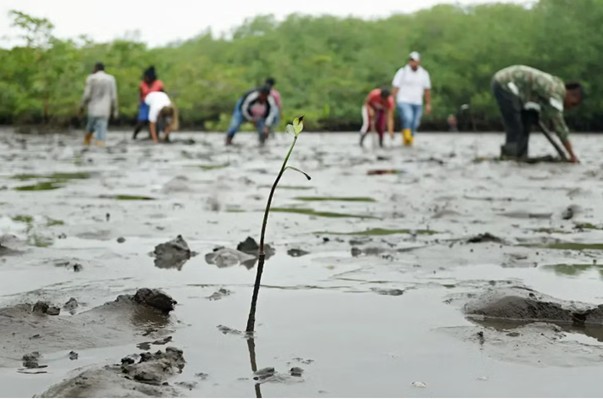
Women are already leaders in global environmental movements, are most active in environmental causes, yet are not equally represented. Worldwide, pro-environmental attitudes are often considered feminine, as they are associated with homemaking and healing (Agarwal, 1992; Echavarren, 2023; Strapko, 2016). As the environment and its sustainability concerns have been feminized, men do not favor pro-environmental policies as women do, and because women are less represented than men in political spaces, there is often a lack of environmental consideration (Norgaard & York, 2005; UN, 2025). Women have been at the forefront of representation in grassroots or local organizations in various countries and are often leaders and more active in these spaces than men are (Agarwal, 1992; Chen & Hansen, 2022). Female leadership is at the forefront of these movements because it is often expected of women to care for, clean, and feed their families (Echavarren, 2023). In patriarchal family structures, men are usually the heads of the household, as they have historically been the members of the home who make decisions for and financially support the family. Despite this concept, many Latin American households uphold this patriarchal tradition when women are increasingly becoming the heads of modern homes (Liu et al, 2017).
Latin America and Gender Equality
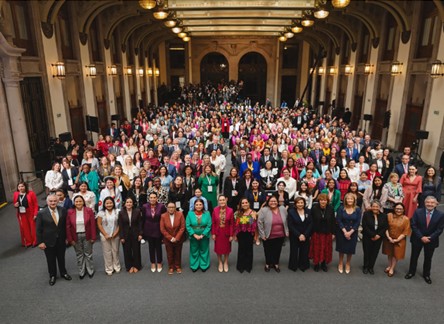
Latin America is about 69% Catholic, and this has been cited as one of the reasons many of its countries lack progress in social justice, including gender equality (Berry et al., 2024; Pew Research Center, 2014). Machismo is an ideology that many members of the Hispanic/Latin American community have, which is highly misogynistic and has been shown to affect men and women in our communities negatively (Nuñez et al., 2015). Because machismo and patriarchal views are favored in Latin America, there have been increasing numbers of femicide, or “the killing of women and girls on account of their gender” (Castano, 2024; ECLAC, 2024). Increased female representation in positions of power across Latin America is overshadowed by the issues that remain prevalent to this day (Mam, 2025). Women who have held positions of power in the last decade or so are in favor of sustainable initiatives and have been improving efficiency and increasing GDP, like Claudia Sheinbaum, the current president of Mexico, and Dilma Rousseff, the former president of Brazil. (Caiazza & Barrett, 2003; Latin Nation, 2024; Randall, 2025). Because of this disconnect from the public, a restructuring and support for women/girls are needed, as well as the reduction of machista and patriarchal attitudes. The key to this effort is education.
Moving Forward
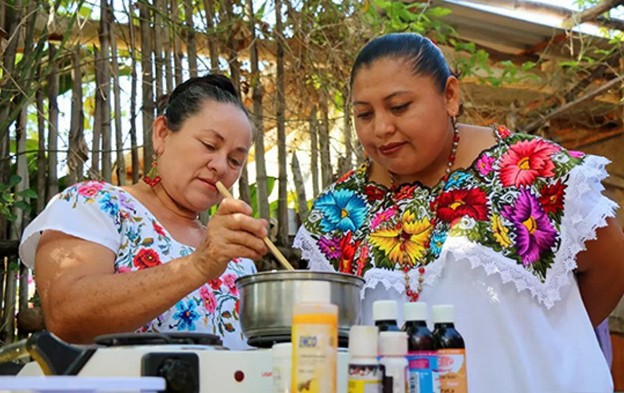
Increasing educational opportunities and support for women and girls across Latin America is an important step, as many researchers have suggested, to increase female representation and leadership, which, according to my research, can also help advance sustainability (Randall, 2025; Hîrju, 2025; Hoel, 2021). An essential part of increasing this education involves incorporating and engaging with Indigenous anticolonial perspectives. Including Indigenous nations in efforts has been proven to be effective in medicine and scientific research, and I think their inclusion in education can be just as valuable (Ijatuyi, 2025; Koutouki et al., 2018). Education on gender studies and how gender norms and similar concepts, like machismo, can harm one’s mental health and cause anxiety/depression is also necessary to begin dismantling their harmful ideology from a young age (Hoel, 2021; Nuñez et al., 2015). Education in environmental studies and climate change is vital to stay informed about current issues and to change the perception that being pro-environmental is a feminine issue (Hîrju, 2025).
Although my research focused on Latin America and its cultural attitudes towards social movements such as gender equality and environmentalism, it is important to note that this is an issue in other countries as well. As mentioned earlier, the 2025 Sustainability Development Goals Report states that gender equality in over 131 countries remains unchanged or has very little progress (UN, 2025). Advancing gender equality can help address many of the issues outlined in the 2030 ASD, thereby improving the quality of life worldwide (UNWomen, 2025). The sustainable future the United Nations alludes to is a group effort. My recommendations for achieving Goal #5 are to learn about sustainability issues and educate others on them. I am currently pursuing a Master’s in Natural Resource Stewardship, and I am proud to share what I know and continue to learn with my family on the impacts of machismo. This is sustainability. Consideration of the future while meeting your needs. Sustainability is an intersectional ideology that should be implemented across many facets of our lives, and it can help do more if we do more with it.
References
Agarwal, B. (1992). The gender and environment debate: Lessons from India. Feminist Studies, 18(1), 119–158. https://doi.org/10.2307/3178217
Berry, E., Albro, R., & Washington Office on Latin America. (2024). Churches and cosmologies: Religion, environment, and social conflict in Latin America [Video]. Intersections. Social Science Research Council. https://www.youtube.com/watch?t=7&v=Ek5qI3IvY0g&embeds_referring_euri=https%3A%2F%2Fintersections.ssrc.org%2F&source_ve_path=OTY3MTQ.
Caiazza, A. & Barrett, A. (2003). Engaging women in environmental activism: Recommendations for Rachel’s network. Institute for Women’s Policy Research. Publication #1913. https://iwpr.org/wp-content/uploads/2021/01/I913.pdf.
Castano, D. (2024). Femicide in Latin America. Human Rights Research Center.https://www.humanrightsresearch.org/post/femicide-in-latin-america
Chen L., Hansen H. M. (2022). Gender and power in China’s environmental turn: Acase study of three women-led initiatives. Social Science, 11(3), 97. https://doi.org/10.3390/socsci11030097.
Echavarren, J.M. (2023). The gender gap in environmental concern: support for an ecofeminist perspective and the role of gender egalitarian attitudes. Sex Roles, 89 (1), 610–623. https://rdcu.be/eRYmf.
Economic Commission for Latin America and the Caribbean. (2024). At least 11 women are victims of femicide every day in Latin America and the Caribbean. UN ECLAC. https://www.cepal.org/en/pressreleases/least-11-women-are-victims-femicide-every-day-latin-america-and-caribbean.
Hîrju, I. (2025). Human rights and the impact of environmental challenges: Ensuring the right to education in the context of climate change. Law Review: Judicial Doctrine & Case-Law, 254–266.
Hoel, R. (2021). Development in Latin America: An examination of women’s autonomy. The Claremont Colleges. https://pressbooks.claremont.edu/soc189pom001/chapter/rowan-womens-access-to-education-in-the-region-emphasizing-indigenous-women/.
Ijatuyi, E. J., Lamm, A., Yessoufou, K., Suinyuy, T., & Patrick, H. O. (2025). Integration of Indigenous knowledge with scientific knowledge: A systematic review. Environmental Science & Policy, 170, 104119. https://doi.org/10.1016/j.envsci.2025.104119.
Koutouki, K., Lofts, K., & Davidian, G. (2018). A rights‐based approach to Indigenous women and gender inequities in resource development in northern Canada. Review of European Comparative & International Environmental Law, 27(1), 63–74. https://doi.org/10.1111/reel.12240
Latin Nation. (2024). The powerful women presidents of Latin America. Latin Nation. https://latination.com/women-presidents-latin-america/
Liu, C., Esteve, A., & Treviño, R. (2017). Female-Headed Households and Living Conditions in Latin America. World Development, 90, 311-328. https://doi.org/10.1016/j.worlddev.2016.10.008
Mam, Y., (2025). Hisplaining why Latin America has female presidents. Hispanic Exclusive. https://hispanicexecutive.com/hisplaining-why-latin-america-has-female-presidents/.
Norgaard, K., & York, R. (2005). Gender equality and state environmentalist. Gender and Society, 19(4), 506-522. http://www.jstor.org/stable/30044614.
Núñez, A., González, P., Talavera, G. A., Sánchez-Johnsen, L., Roesch, S. C., Davis, S. M., Arguelles, W., Womack, V. Y., Ostrovsky, N. W., Ojeda, L., Penedo, F. J., & Gallo, L. C. (2015). Machismo, marianismo, and negative cognitive-emotional factors: Findings from the Hispanic Community Health Study/Study of Latinos Sociocultural Ancillary Study. Journal of Latina/o Psychology, 4(4), 202. https://doi.org/10.1037/lat0000050.
Pew Research Center. (2014). Religion in Latin America. Pew Research Center. https://www.pewresearch.org/religion/2014/11/13/religion-in-latin-america/.
Randall, D. (2025). Sheinbaum shares advances in sustainability and the environment. Mexico Business News. https://mexicobusiness.news/sustainability/news/sheinbaum-shares-advances-sustainability-environment
Strapko, N., Hempel, L., MacIlroy, K., & Smith, K. (2016). Gender differences in environmental concern: Reevaluating gender socialization. Society & Natural Resources, 29(9), 1015–1031. https://doi-org.10.1080/08941920.2016.1138563.
United Nations. (2025) Goal 5 Overview. United Nations. https://sdgs.un.org/goals/goal5#overview.
United Nations. (2025). The Sustainable Development Goals Report. United Nations. https://unstats.un.org/sdgs/report/2025/The-Sustainable-Development-Goals-Report-2025.pdf.
UNWomen. (2025). With a call to recognize the contributions and rights of all women and to move towards substantive equality and the care society, the XVI Regional Conference on Women kicked off in Mexico. UNWomen. https://lac.unwomen.org/en/stories/noticia/2025/08/con-el-llamado-a-reconocer-el-aporte-y-los-derechos-de-todas-las-mujeres-y-avanzar-hacia-la-igualdad-y-la-sociedad-del-cuidado-inaugaración-méxico-xvi-conferencia-regional-mujer.