
Guest Post by Elizabeth Diaz-Clark, 2024-2025 Sustainability Leadership Fellow and Ph.D. Student in the Department of Biology and Graduate Degree Program in Ecology at Colorado State University
Seeing is Believing
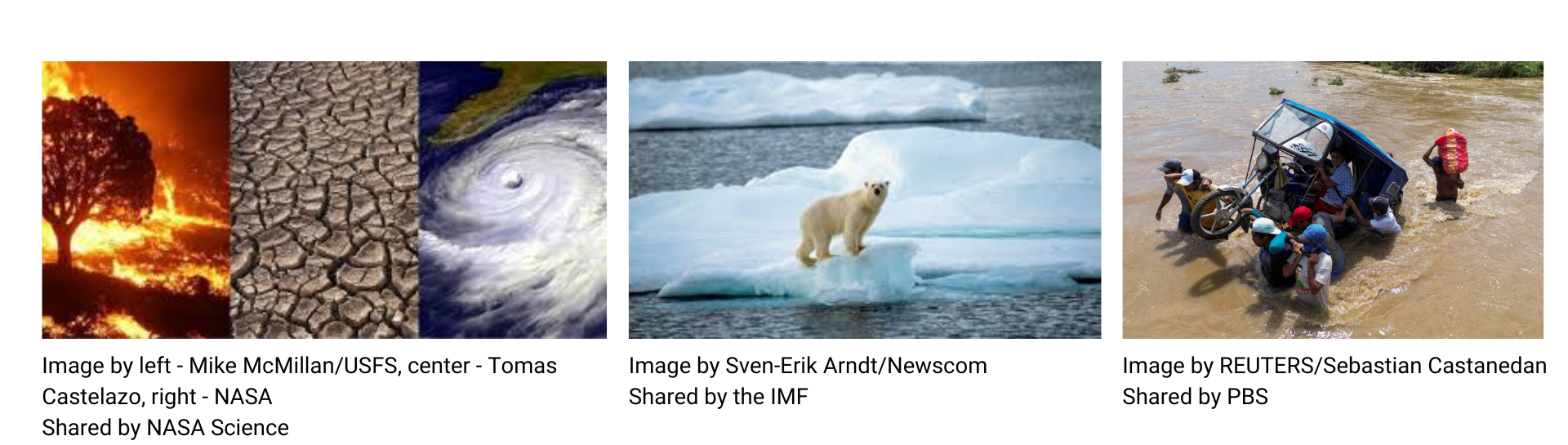
What do you picture when you think of climate change? Is it a sad polar bear on an isolated ice sheet? A cracked barren landscape? Or a more abstract image of Earth on fire? Your views have likely been shaped by the dominant media images you’ve been exposed to.
Climate change is one of the greatest challenges facing the world. However, the visual media commonly used to depict it presents a narrow perspective of this deeply complex issue. By focusing mainly on the negative impacts of climate change, like extreme weather events, the dominant visual paradigms we see can make the problem feel distant, hopeless, and beyond our control. A quick Google image search of “climate change” reveals a uniform set of photos that all present a bleak and distanced perspective of the Earth and landscapes.
Rarely do you see humans in these images, and when humans are shown, the visuals misrepresent the full extent of who is being impacted by climate change. Often, they show the only vulnerable populations as those residing in the Global South, presenting a limited view of those being harmed. Further, only focusing on vulnerability and presenting images of people as victims of climate change can inadvertently reinforce the notion that affected groups lack the power or means to respond to this challenge, diminishing their role as active participants in addressing it.
Emphasizing that many of the impacts of climate change are largely felt by marginalized populations is important, but for people in the United States (U.S.), focusing solely on these impacts can lead to harmful distancing and personal separation from the issue. For example, a systematic survey of the American public found that while many people in the U.S. think that climate change will harm the poor or people in developing countries, less than half think it will affect themselves or people in their community.
These perceptions contradict findings from the Environmental Protection Agency, that while there will be differential effects across regions and populations in the U.S., climate change is set to impact everyone.
Diversifying Climate Change Images
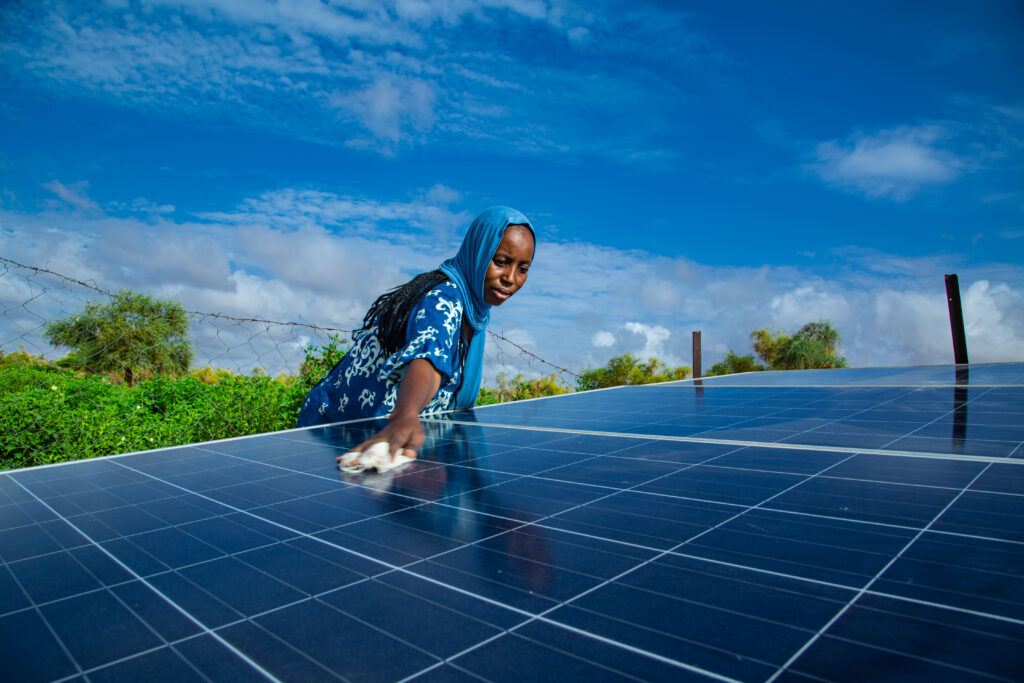
To counteract these misconceptions, we need more culturally inclusive and representative visuals that better reflect locally relevant and diverse experiences and perspectives of climate change. Diversifying visual representations of climate change means expanding our imagery to include not just the fear or anxiety-inducing negative impacts, but also the resilience, innovation, and agency that communities are demonstrating in the face of climate change.
Research has shown that imagery of climate impacts promotes feelings of salience but undermines motivation and confidence in making a difference (i.e. self-efficacy), while imagery of people, solutions, and actions that can be taken promotes empowerment. Images of extreme events like dry, cracked ground and wildfires can increase concern about the problem in the short-term but ultimately can leave people feeling powerless to do anything about it. Images should instead “embody people-centered narratives, local impacts, and positive solutions, and must resonate with the identity and values of the viewer” as proposed by the Climate Visuals Project.
Beyond photographs, other types of visuals can also play a powerful role in climate communication. To move beyond just communicating the impacts of climate change to building understanding of the mechanisms behind these issues, diagrams and infographics are necessary. These can help explain complex scientific concepts in an accessible way and show connections between climate factors and society. Resources like those from Dr. Kerry Emanuel, Professor Emeritus of Atmospheric Science at MIT, are great examples of interactive data visualizations that can make climate science more accessible to broader audiences. Moreover, videos can put a human face on climate change by telling stories of those impacted and those taking action. The Lens on Climate Change (LOCC) project, which engages middle and high school students in creating short films documenting climate impacts on their local communities, is a promising example of this.
Leveraging the Power of Visuals
Through a wider range of visuals, we can reshape social perceptions and inspire people of all backgrounds to get involved and inspired to learn more. By incorporating more relevant and culturally inclusive imagery, we can make climate communication more accessible, compelling, and effective.
The next time you are looking to share information about climate change, think critically about the impact that the visuals you are using may have on your audience. And the next time you are reading an article or learning about climate change, take a second look at the images being used and consider how they may be shaping your perspectives on this issue.
So much is at stake – let’s work together to make the visuals as powerful as the message.