
Guest post by Haihui Zhu, 2025-2026 Sustainability Leadership Fellow and Postdoctoral Fellow in the Department of Atmospheric Science
“A powerful storm kicked up a towering wall of dust that rolled through metro Phoenix on Monday (Aug. 25, 2025), darkening the sky, blinding drivers, knocking out power and grounding flights at one of the nation’s busiest airports”, reported CBS News. Natural dust storms are often the first thing that comes to mind when we talk about dust pollution. There are, however, other types of dust that are emitted from human activities, or from traditionally non-dusty lands that are perturbed by humans. These are what we call anthropogenic dust. Anthropogenic dust pollution can have adverse environmental and health impacts and we currently know very little about its emissions, composition, and how it interacts chemically and physically with other components in the atmosphere and other earth systems.
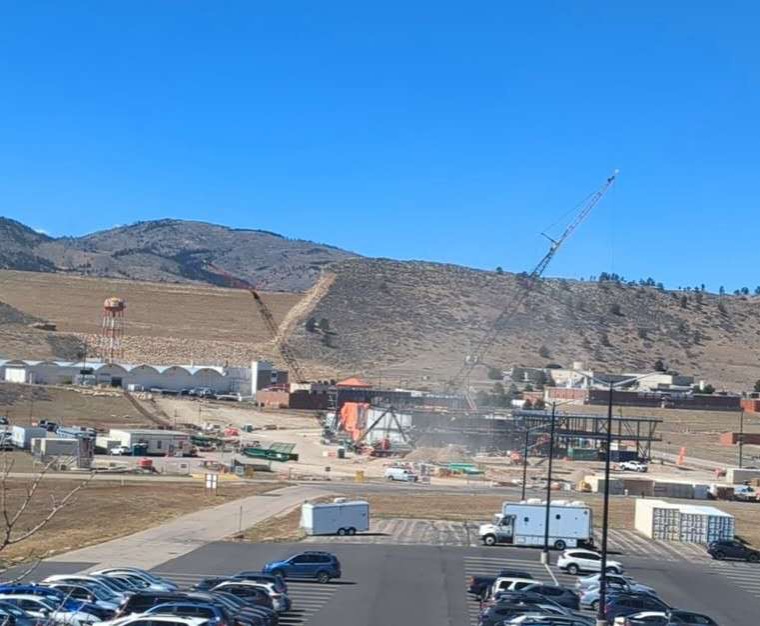
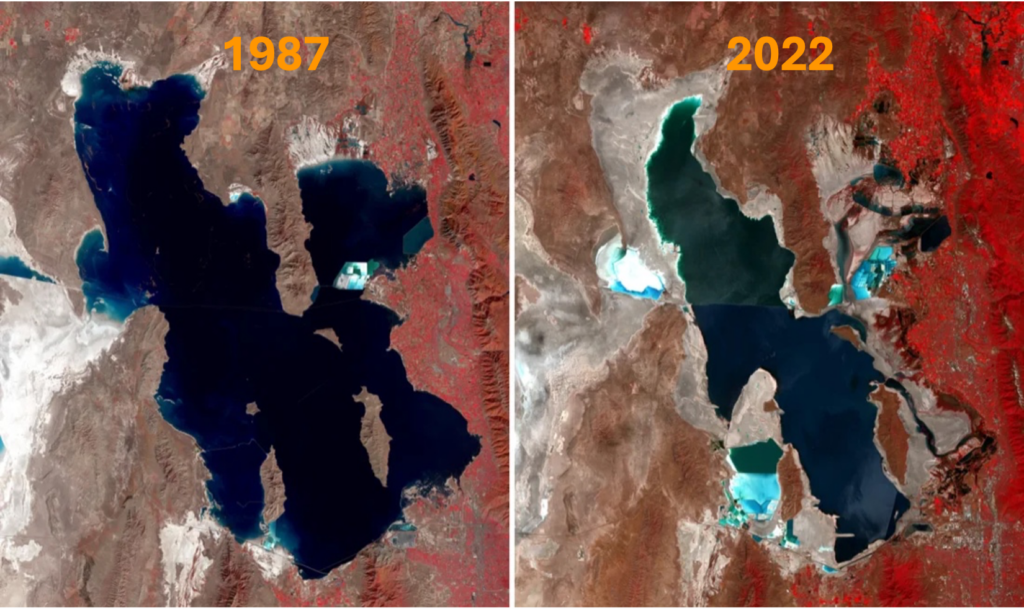
Anthropogenic dust pollution can happen in 3 main ways. First, by manual or machine lifting during human activities, such as mining, construction, and vehicles driving on paved or unpaved surfaces. Dust emissions from such activities are usually associated with higher heavy metal or toxin concentrations. The second type comes from wind blowing over lands whose surface texture and soil properties have been changed by humans, which includes farming and dry lakes. Increased water demand for urban usage has contributed to the growing number of dry lakes; famous examples include Owen lake in California and the Great Salt Lake in Utah. Dust emission from this type can be profound in spatial and temporal scale, spreading over 20 miles and suspending in the atmosphere for years. In certain conditions, its components can resemble the first type and carry high amounts of other pollutants. The third type of anthropogenic dust is caused by changed dynamics of wind, clouds, and precipitation that changes the occurrences of dust events. This type can be difficult to notice and measure because of its similarities to natural dust in many ways. A recent study has found that wildfire events, which have been growing in size and frequency in recent years, can cause dust events in normally dust-free regions.
After learning about the three types of anthropogenic dust, you probably won’t be surprised to learn that anthropogenic dust emissions have increased drastically over the last 150 years almost everywhere on the globe. Following European settlement in the western U.S., there has been a 500% increase in dust deposition, likely due to the expansion of livestock grazing. In Australia, Marx et al. found that heavy metals concentrations in an alpine peat mire are about 5 times higher compared to the pre-industrial period. And even in Antarctica, dust deposition doubled in the last century, coincident with Southern Hemisphere warming and desertification in Patagonia and northern Argentina.
We wouldn’t worry about this increasing trend if not for the evidence of environmental and health threats from anthropogenic dust. Dust deposition on snow cover accelerates melting and reduces snow cover duration, which has negative implications for water resources. Dust particles interact with solar radiation, affect cloud formation, and therefore has implications for climate change. Depending on its sources, compositions, particle sizes, and distribution in the atmosphere, it can cool or warm the climate. Anthropogenic dust oftentimes carries high amounts of heavy metals, which are the primary cause of acute health impacts and mortality from air pollution. All these adverse health, ecological and climate impacts have economic and equity implications: if those who benefit from mining, construction, and farming activities are not the ones who pay the bills due to dust pollution, are we pricing or taxing the products properly to cover environmental recovery or healthcare costs?
Fortunately, there are signs of slowed or reduced anthropogenic dust in several regions, thanks to increased environmental awareness and recovery projects. Since 2000, Los Angeles Department of Water and Power has been constructing and implementing dust control measures, such as shallow flooding and vegetation, spent more than 2.1 billion on dust control as of May 2019. However, the amount of anthropogenic dust remains huge and quantifying the amount remains challenging, leading to uncertainties in quantifying the corresponding health, ecology and climate impacts. I am working with a group of experts in agricultural resources, atmospheric science, public health, and statistics, hoping to reduce such uncertainties by utilizing data from satellite, air quality measurements, and models. We found that anthropogenic dust emissions across the contiguous U.S. have been significantly underestimated. With this work, we hope to better quantify the spatiotemporal variability of anthropogenic dust emission, reduce the uncertainties in estimating their impacts on public health, ecosystems, and climate, and eventually inform policy for better dust emission management.