
Guest post by Chika Winnifred Agha, 2025-2026 Sustainability Leadership Fellow and PhD Candidate in the Department of Civil and Environmental Engineering
Rising temperatures, erratic rainfall, and longer dry seasons are no longer distant climate projections; they are everyday realities for farmers in semi-arid regions of West Africa. Across northern Nigeria and northern Ghana, smallholder farmers who depend on rain-fed agriculture are facing increasing crop losses due to heat stress and water scarcity, making food insecurity an immediate threat to livelihoods and rural stability.
These challenges are part of a broader pattern of worsening climate impacts across Africa, where environmental pressures intersect with social and economic vulnerabilities. According to the World Bank (2025), more than 100 million people across East, West, and Central Africa are experiencing acute hunger, driven by climate stress and conflict [1]. In West Africa’s semi-arid zones, this variability directly undermines household food security [2]. Addressing these pressures requires moving beyond isolated interventions. Research by Agha and Ampiaw (2026) highlights the need for integrated climate-smart solutions that link food, energy, and water systems an approach known as the Food-Energy-Water (FEW) nexus [3].
Understanding the Food‑Energy‑Water Nexus

In semi‑arid regions, where resources are scarce and climate variability is high, failures in one system quickly ripple across others. Agriculture does not operate in isolation. Food production requires water for crops and energy for irrigation, storage, and processing. Water systems, in turn, rely on energy for pumping and distribution, while energy generation often competes with agriculture for land and water resources. Disruptions in one system can cascade across the others.
The FEW nexus framework highlights these interdependencies and underscores why climate adaptation strategies must be designed holistically. By aligning food production with sustainable water use and access to clean energy, farmers can build resilience to climate shocks while reducing environmental pressures.
The Study Regions: Northern Nigeria and Northern Ghana

Northern Nigeria and northern Ghana share similar agro‑ecological conditions that make them particularly vulnerable to climate change.
In northern Nigeria (Adamawa, Bauchi, Benue, Borno, Gombe, Jigawa, Kaduna, Kano, Katsina, Kebbi, Kogi, Kwara, Nasarawa, Niger, Plateau, Sokoto, Taraba, Yobe, Zamfara, Federal Capital Territory), the states lie within a vast semi‑arid zone characterized by high temperatures and erratic rainfall [4]. These climatic conditions disrupt planting calendars, reduce crop yields, and increase the risk of food shortages. Similarly, northern Ghana (Upper East, Upper West, Northern, Savannah, North East) experiences delayed rainfall onset, prolonged dry spells, and rising temperatures. These changes reduce the reliability of rain‑fed agriculture and strain traditional farming systems that have sustained communities for generations [5]. Across both countries, smallholder farmers are on the frontlines of climate impacts, yet they also hold the key to adaptation if supported by appropriate, context-specific solutions. These shared conditions make northern Nigeria and northern Ghana ideal contexts for examining integrated climate‑smart solutions.
Three Climate‑Smart Solutions That Make a Difference
Each of the following solutions addresses multiple dimensions of the food–energy–water system rather than treating them in isolation.
Agrivoltaics: Farming Under Solar Panels
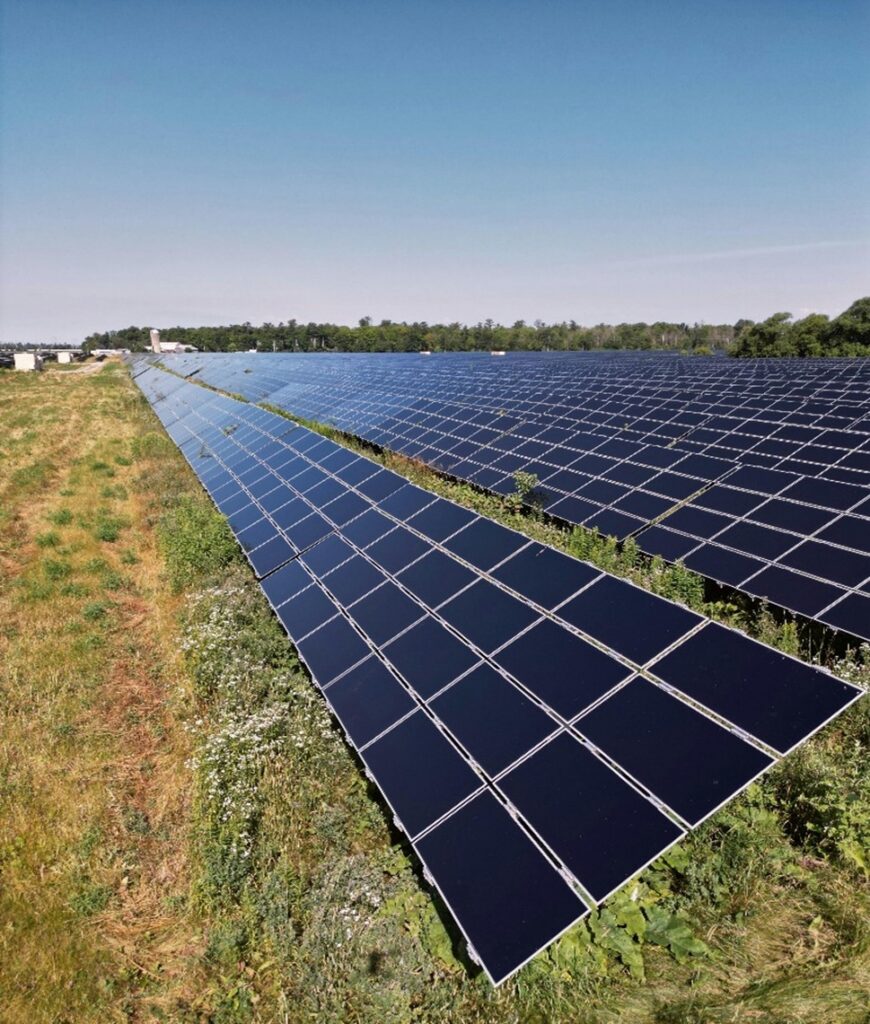
Agrivoltaics is an innovative approach that combines crop production and solar energy generation on the same land. By installing solar panels above cropland, farmers create partial shade that reduces heat stress, lowers evapotranspiration, and improves microclimatic conditions for crops.
Beyond agronomic benefits, agrivoltaics generates clean electricity that can power irrigation systems, cold storage, and small‑scale processing, reducing reliance on fossil fuels and improving farm profitability. While the initial costs can be high, studies show strong long‑term benefits for productivity, energy access, and climate resilience [6].
Drip Irrigation: Using Water More Wisely

As water scarcity intensifies, efficiency becomes critical. Drip irrigation systems deliver water directly to plant roots, dramatically reducing losses from runoff and evaporation. This targeted approach can significantly improve yields while conserving limited water resources.
When combined with solar‑powered pumps, drip irrigation becomes a scalable and affordable solution for smallholder farmers, particularly in off‑grid rural areas. Such systems strengthen the link between clean energy and sustainable water use, reinforcing the FEW nexus in practice.
Agroforestry: Letting Trees Protect Crops
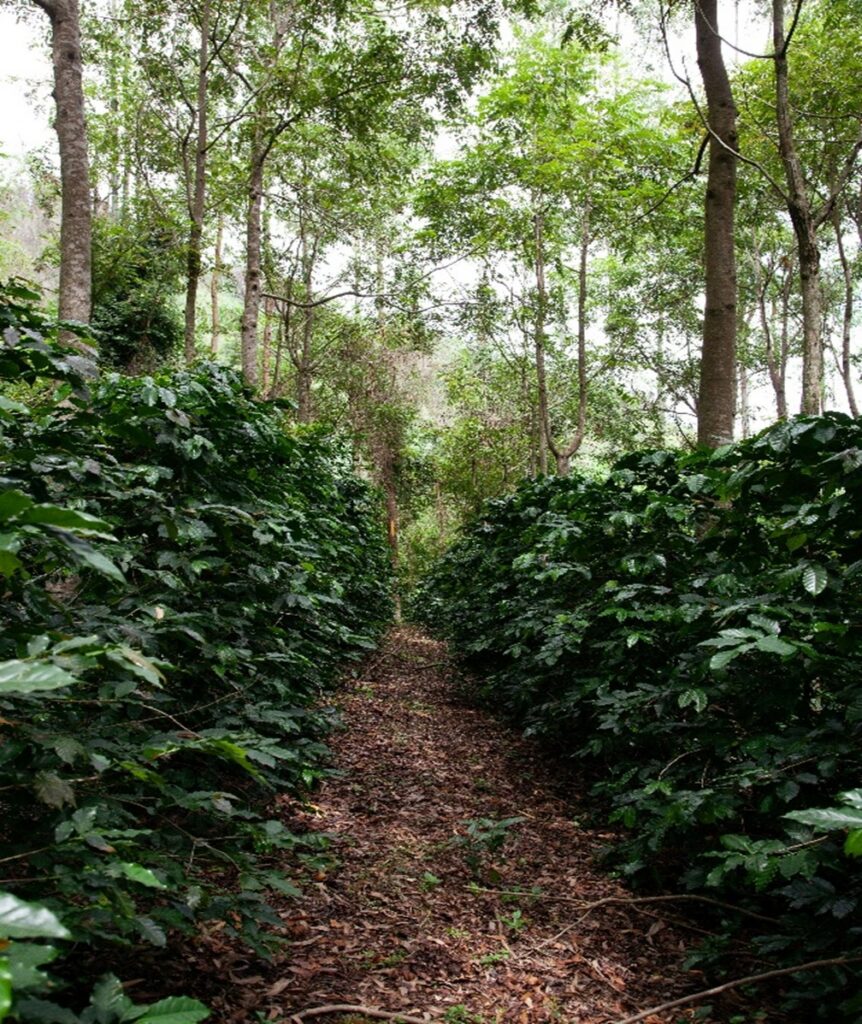
Agroforestry integrates trees with crops, creating diversified farming systems that are well-suited to semi-arid environments. Trees provide shade that moderates temperatures, improves soil structure, reduces erosion, and enhances water retention.
In West Africa, agroforestry aligns closely with indigenous knowledge systems and traditional land‑use practices. Beyond environmental benefits, these systems generate additional income through fruit, timber, and fuelwood, strengthening household resilience and food security [7].
Why Integration Matters
No single solution can fully address the complex challenges posed by climate change. Evidence from recent research shows that integrating agrivoltaics, efficient irrigation, and agroforestry delivers the greatest benefits, including increased food productivity, improved water-use efficiency, reduced greenhouse gas emissions, greater resilience to climate variability, and more equitable outcomes for smallholder farmers
However, widespread adoption depends on supportive policies, access to financing, technical training, and inclusive decision‑making that prioritizes smallholder needs, particularly those of women and marginalized farmers.
Climate‑smart agriculture is not merely a technological fix. It is a system-based approach that centers people, ecosystems, and social equity under growing climate pressures. As the planet warms, sustainable farming will depend not on single interventions, but on smart, interconnected solutions that support both human well‑being and environmental health.
References
[1] World Bank, Food Security Update 113, Washington, DC, USA, Feb. 2025. [Online]. Available: https://thedocs.worldbank.org/en/doc/3da165e0bcb0ed7dddba9939afb21fda-0590012023/related/Food-Security-Update-113-February-14-2025.pdf
[2] R. Zougmoré, S. Partey, M. Ouédraogo, B. Omitoyin, T. Thomas, A. Ayantunde, and A. Jalloh, “Toward climate-smart agriculture in West Africa: A review of climate change impacts, adaptation strategies and policy developments for the livestock, fishery and crop production sectors,” Agriculture & Food Security, vol. 5, no. 1, p. 26, 2016, https://doi.org/10.1186/s40066-016-0075-3
[3] C. W. Agha and S. Y. Ampiaw, “Climate stress and food-energy-water challenges in Nigeria and Ghana: A DPSIR systems approach to sustainable agriculture,” Environmental Technology and Science Journal, vol. 16, no. 2, 2026, https://dx.doi.org/10.4314/etsj.v16i2.15
[4] E. E. Ogar, I. Wahab, K. G. Zubairu, and B. J. Afanwoubo, “The effects of climate change on agricultural productivity in Northern Nigeria,” International Journal of Geography, Environment and Management, vol. 11, no. 2, pp. 109–126, 2025, doi: 10.56201/ijgem.vol.11.no2.2025.
[5] A. Chemura, B. Schauberger, and C. Gornott, “Impacts of climate change on agro-climatic suitability of major food crops in Ghana,” PLOS ONE, vol. 15, no. 6, 2020, https://doi.org/10.1371/journal.pone.0229881
[6] M. Trommsdorff, I. S. Dhal, Ö. E. Özdemir, D. Ketzer, N. Weinberger, and C. Rösch, “Agrivoltaics: Solar power generation and food production,” in Solar Energy Advancements in Agriculture and Food Production Systems, Academic Press, 2022, pp. 159–210, https://doi.org/10.1016/B978-0-323-89866-9.00012-2
[7] M. N. Danjuma, S. Mohammed, and M. Z. Karkarna, “Farmers’ participation in agroforestry system in Northwestern Nigeria,” Nigerian Journal of Environmental Sciences & Technology, vol. 2, pp. 257–265, 2018.
Banner image: Onions cultivated across Northern Nigeria and Northern Ghana. Photo credit: Chioma Jennifer Agha.

Chika Winnifred Agha is a Ph.D. candidate in the Department of Civil and Environmental Engineering at Colorado State University. She holds both bachelor’s and master’s degrees in Civil Engineering and brings an interdisciplinary perspective through her training in civil engineering and engineering education. Her research bridges technical engineering practice with educational and social frameworks that support effective professional preparation. Her work examines how early-career engineers navigate professional development challenges and the growing influence of artificial intelligence as they transition from academic training into professional practice. Using both qualitative and quantitative research methods, she investigates workforce preparation and professional development in engineering.