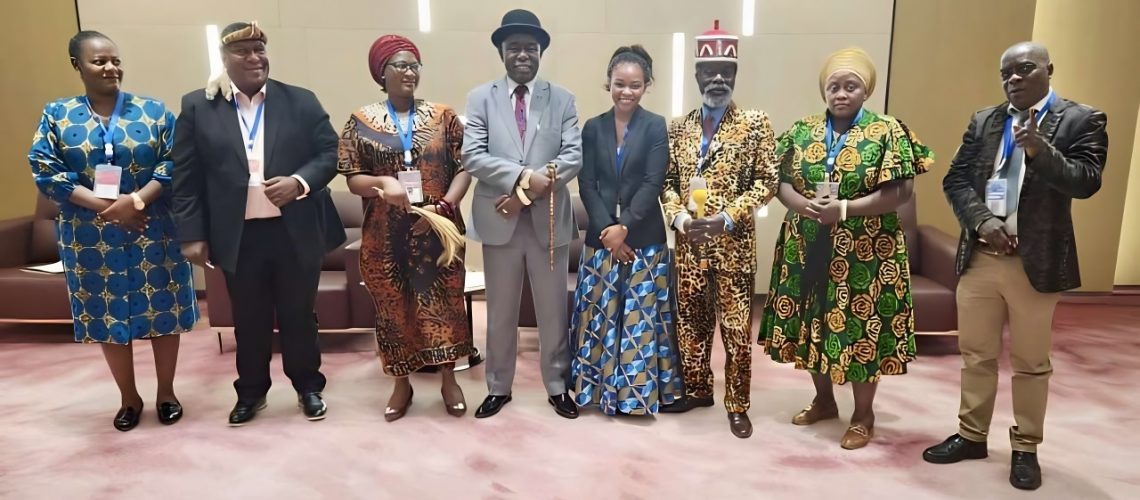
Guest Post by Julia Choolwe Munsaka, 2024-2025 Sustainability Leadership Fellow and Ph.D. Candidate in the Department of Political Science at Colorado State University
Despite being one of the lowest contributors to greenhouse gas emissions that are causing climate change, Africa has experienced widespread losses and damages attributed to human-induced climate change. Moreover, Africans are disproportionately employed in climate exposed sectors with 55-62% of the sub-Saharan workforce employed in agriculture where at least 95% of cropland is dependent on rainfall. Rural areas also face greater livelihood risks from climate hazards and growing informal settlements without basic services in urban areas increase the vulnerability of large populations to climate hazards. Losses from climate-change include biodiversity loss, water shortages, reduced food production, the loss of lives and reduced economic growth.1
The region is highly impacted by climate change-induced natural disasters from devastating droughts to severe floods. These events significantly impact agricultural productivity and food security and increase vulnerability among farming communities. The reliance on rain fed agriculture has made the region particularly vulnerable to climatic variations as droughts lead to severe yield losses and impede people’s ability to grow food and rear livestock. Agricultural losses from droughts are a major driver of food insecurity in the region, a trend that continues to rise in the 21st century.2
While many of the current climate and disaster strategies and plans are clear on the need for disaster risk governance and institutional frameworks, there is still emphasis on top-down approaches. Communities therefore remain passive recipients of disaster management activities as frameworks put much of the responsibility on governments. As such, traditional coping strategies and the preservation of traditional knowledge of experience of disasters is rarely incorporated into disaster plans. This lack of acknowledging traditional knowledge, skills, and competencies in disaster management impacts the overall quality of disaster plans.3
Traditional knowledge (TK) can play a crucial role in disaster management in Africa by providing localized insights and adaptive strategies that have been honed over generations. In rural areas and communities particularly, TK is increasingly recognized as an important tool for climate and disaster management as this knowledge can contribute towards saving human lives and properties from the consequences of disasters.4 TK has different methods and practices that can be integrated into scientific research and management for disasters.5
Across the region, TK informs decision making about fundamental aspects of daily and long-term activities. As such, TK is integral to social-cultural complexity which includes language, resource use practices, social interactions, religion, beliefs, values, rituals and spirituality. TK is thus an essential part of historical and cultural legacies and forms a pillar of cultural, political, economic and scientific identities.6 Though much has been about traditional knowledge, its documentation in disaster management and climate change in Africa is limited. TK is not well recognized as policymakers continue to rely on mitigation strategies based on western (?) scientific knowledge.7 For example, indigenous early warning systems and practices such as predicting a flood simply by observing the behavior of dragonflies or a drought by the behavior of grasshoppers which have been passed down through generations and safeguarded communities for centuries are not incorporated into mainstream disaster climate and disaster strategies.
Most common knowledge holders of such TK include elders of a community, traditional leaders, and traditional healers.8 Traditional leaders, such as chief and chieftainesses are therefore often regarded as key custodians of this TK and seen as mediators of community practices and important players in local community governance. They play a fundamental role in local governance, wielding influence over their communities through cultural, social, and political structures that predate formal state systems.9 But despite their importance, the contributions of traditional leaders to disaster management remain largely under-explored, overlooked and underutilized within formal policy frameworks. Leveraging their deep-rooted connections to local communities and traditional governance structures, traditional leaders can play a vital role in disaster management across Africa. Leveraging their deep-rooted connections to local communities and traditional governance structures, traditional leaders can play a vital role in disaster management across Africa.
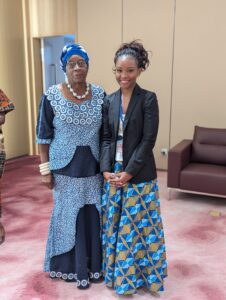 Incorporating traditional knowledge into climate and disaster policy would involve a collaborative approach that values traditional wisdom alongside scientific methods. This would include for example, empowering traditional leaders to participate in decision-making forums and contribute to policy recommendations, combining traditional early warning systems like the insect behavior with modern climatic data, and even training local communities to use both scientific forecasts and traditional indicators to prepare for disasters. By incorporating traditional knowledge into policy and working with traditional leaders, governments can create more inclusive policies that more culturally relevant, sustainable and driven by the local communities that are the most vulnerable to and affected by these disasters.
References
1. Coppola, D. P. (2015). Participants – Governmental Disaster Management Agencies. In D. P. Coppola, Introduction to International Disaster Management (Third Edition) (pp. 461-521). Elsevier.
2. Dube, E., & Munsaka, E. (2018). The contribution of indigenous knowledge to disaster risk reduction activities in Zimbabwe: A big call to practitioners. Jàmbá: Journal of Disaster Risk Studies, 10, Article a493
3. Iloka, N. G. (2016). Indigenous knowledge for disaster risk reduction: An African perspective. Jàmbá: Journal of Disaster Risk Studies, 8(1).
4. Leal Filho, W., Wolf, F., Totin, E., Zvobgo, L., Simpson, N. P., Musiyiwa, K., Kalangu, J. W., Sanni, M., Adelekan, I., Efitre, J., Donkor, F. K., Balogun, A.-L., Mucova, S. A. R., & Ayal, D. Y. (2022). Is indigenous knowledge serving climate adaptation? Evidence from various African regions. Development Policy Review, 41(4).
5. Rai, P., & Khawas, V. (2019). Traditional knowledge system in disaster risk reduction: Exploration, acknowledgement, and proposition. Jàmbá: Journal of Disaster Risk Studies, 11(1), Article 484.
6. Sirba, H. Y., & Chimdessa, T. B. (2023). Review of Impact of Climate Change on Food Security in Africa. Journal of Resources Development and Management, 90.
7. Trisos, C. H., Adelekan, I. O., Totin, E., Ayanlade, A., Efitre, J., Gemede, A., . . . Zakieldeen, S. (2022). Climate Change 2022: Impacts, Adaptation and Vulnerability. Contribution of Working Group II to the Sixth Assessment Report of the Intergovernmental Panel on Climate Change. Intergovernmental Panel on Climate Change. Cambridge, UK and New York, NY, USA: Cambridge University Press .
8. van Niekerk, D., & Coetze, C. (2015). Chapter Chapter 17 – African Experiences in Community-Based Disaster Risk Reduction. In Community-Based Disaster Risk Reduction (pp. 333-349.). Emerald Insights .
9. Zamisa, N. A., & Mutereko, S. (2019). The role of traditional leadership in disaster management and disaster risk governance: A case of Ugu District Municipality by-laws. Jàmbá: Journal of Disaster Risk Studies, 11(1)